The post Individual Learning Versus Personal Learning appeared first on Fearless Teachers.
]]> individual learning. There are many images of “personalized” learning where students are using their devices to work through some kind of learning material alone and at their own pace. While this might be one aspect of a student’s experience in a more personalized learning environment, personal learning is not solely about moving at your own pace; it is about learning in ways that are personally meaningful. Personal learning environments offer students choice about what, how, when, and where they learn. They provide authentic learning opportunities and allow students to go deep.
In a personal learning environment, teachers facilitate opportunities for students to identify strengths and passions and then they structure learning opportunities that allow exploration of these areas. Teachers might structure a learning task so that students choose a content area or topic to focus on and then work in groups of students with common interests to complete a learning task. Perhaps students have a choice 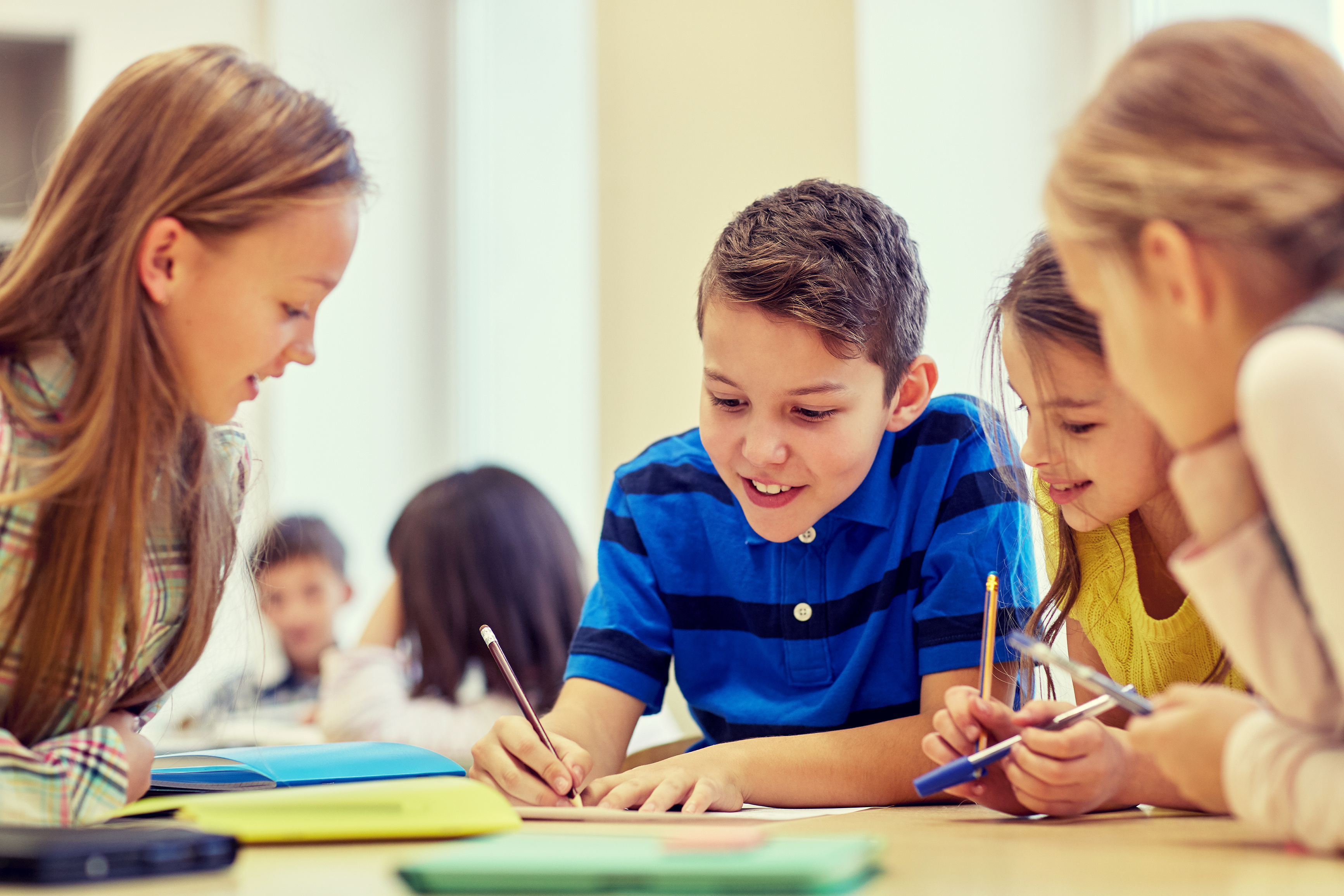 about where they complete groupwork, how they divide up tasks within a group or how they use their time. These are all ways to personalize learning while still learning within a group. The teacher’s job then begins to focus on communicating clear learning goals with clear expectations for success and mastery of the learning goals. In addition, they will need to stretch their thinking to find authentic tasks so students can find purpose and meaning in the learning goals. It’s tough to get all these pieces in place but these are the pieces that create a personal learning environment and groupwork and collaboration are an important part of this. How are your groups providing opportunities for personal learning?
The post Individual Learning Versus Personal Learning appeared first on Fearless Teachers.
]]>The post Personal or Personalized Learning? appeared first on Fearless Teachers.
]]>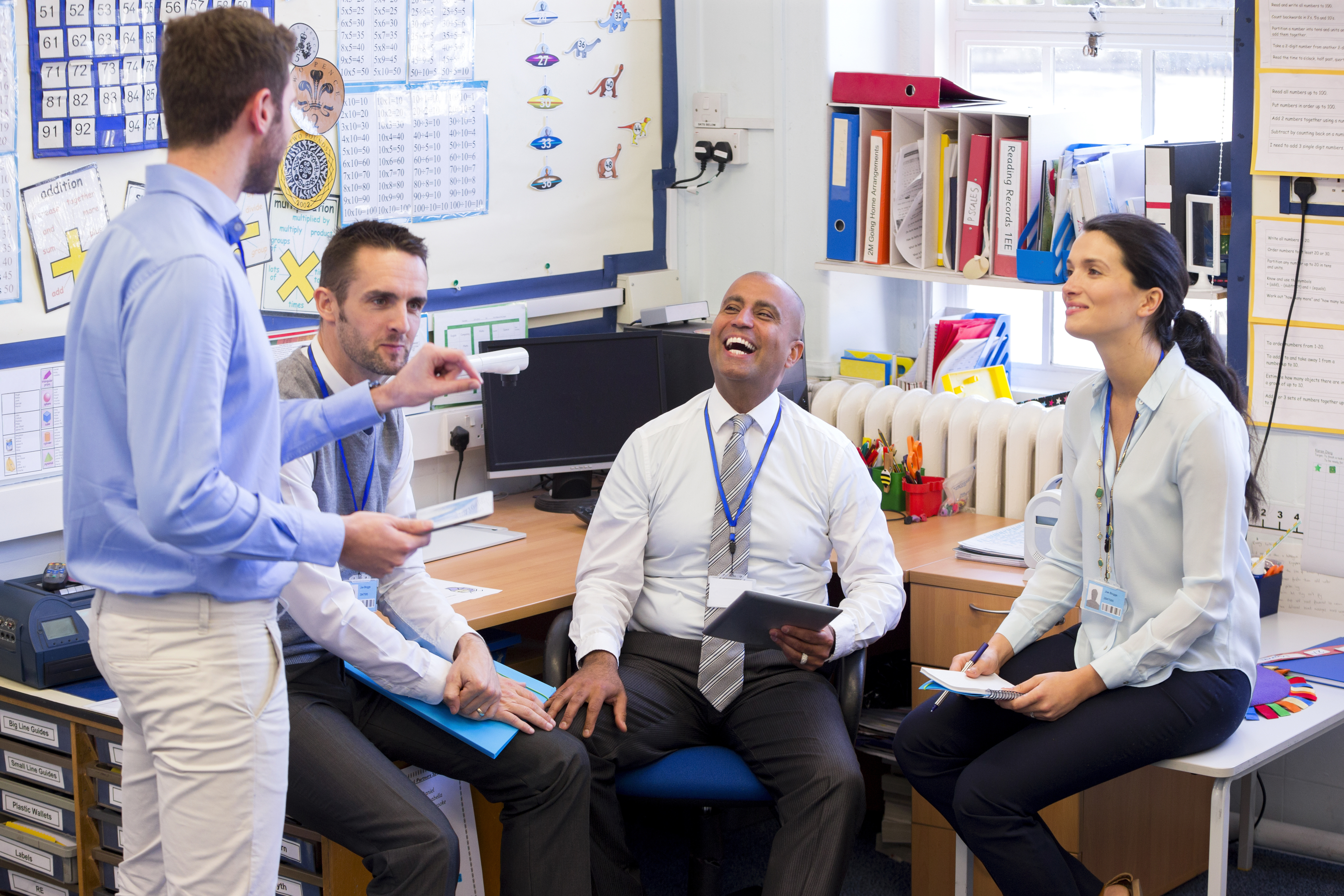 When I wrote my Rowland fellowship proposal a little over a year ago, my main concern was to make sure that mandated personal learning plans didn’t become another superficial piece of paper that had little meaning for students. Over the past year, I have made a lot of discoveries and confirmations. I think the number one issue that has taken over my thoughts is that any change or innovation starts with relationships. This foundation allows for the trust needed in order for every stakeholder to feel safe enough to take the risks necessary to innovate. The idea of personal learning has also really taken shape for me. Initially, I was focused on the personal learning plan itself. It soon became clear to me that the idea of personalized learning was more complicated than I had originally considered. Many people are developing software that tracks student progress so the student can independently work. The vast majority of these folks are calling this personalized learning. Alfie Kohn has made a distinction between personal and personalized learning in his article Four Reasons to Worry About “Personalized Learning”. He argues that “Personal learning entails working with each child to create projects of intellectual discovery that reflect his or her unique needs and interests. It requires the presence of a caring teacher who knows each child well” while “Personalized learning entails adjusting the difficulty level of prefabricated skills-based exercises based on students’ test scores. It requires the purchase of software from one of those companies that can afford full-page ads in Education Week” (Kohn, 2015).
Many people are confused by these terms and I have become much more clear about my vision for personal learning and how we might get there. While I agree with Kohn that there are two totally different ideas about how to increase achievement, I’m not so sure it is the language that matters as much as the ideas. What I have come to realize is that in addition to relationships, the primary concern in making learning more personal is student engagement. Since this looks so different for each student, any number of options could be used to engage a student in a variety of subject areas. What might be engaging in one area or to one student might not work in another situation. So “personalized” learning might be a part of a student’s personal learning plan but it would never be the personal learning plan. In addition, every community will have different needs as its ecosystem will be unique.
Systems & Structures
There are some systems and structures that I am seeing that assist in facilitating relationship building and engagement. Advisories that loop with students for multiple years help students develop much needed trust with adults who can then guide them; authentic student involvement in schedule building and school decision making processes; authentic project based learning opportunities; independent study structures; arts as a part of the core curriculum rather than an extra; professional learning that happens collaboratively between teachers in an ongoing way rather than one time workshop models. These structures are facilitating personal learning in meaningful ways. While change can happen from the top down, it is clear that bottom up change is more sustainable. Administrators can facilitate change by creating systems and structures that enable teachers and students to do things differently. Transforming schools where students are self-directed learners and teachers are facilitating personal learning options is an enormous change from what most of us have experienced as educators and as students.
Even those of us who are leaders of the change, couldn’t have ever experienced this on a large scale and in a public school setting. Whenever anyone is expected to learn something new, all other extraneous learning should be put aside. We would never expect a child learning how to ride a bike to also track her speed and heart rate, right? Making change of this scale happen requires systems that allow and support flexible learning for both teachers and students. Systems allow teachers, and sometimes force teachers, to make changes while also providing a support structure for inevitably difficult challenges that come with any major transformation. Creating these systems allows teachers to focus on increasing engagement by being creative in their classrooms. It also allows any change to sustain itself through new administrators and teacher turnover.
The post Personal or Personalized Learning? appeared first on Fearless Teachers.
]]>The post The Equity of Honors Classes? appeared first on Fearless Teachers.
]]>
Symbol Scales is made of stones of various shapes
The idea of separating students into honors and non-honors classes is fraught with problems, increases the achievement gap and ultimately increases inequity in every classroom and between all students. When I was in school, I wasn’t seen as being “smart” or good at school. As a result, there was never any consideration of me taking honors level anything. As I watched my friends take part in debates and write analyses of current events, I wondered how sitting through lectures and doing worksheets was serving me better? How was this more meaningful for me? That was thirty years ago and not much has changed. What I have realized is that students who do school well need less scaffolding for complex instructional techniques. They follow directions easier and so teachers feel more comfortable using flexible instructional methods with these students.
I think the issue that rubs me the wrong way about traditional honors options is that it is fraught with assumption. On the surface, an honors option is available for students who want to go deeper into a particular subject. This seems reasonable, but is it really what is happening? When I asked students on my steering committee why they took honors classes, they clearly articulated that it was for their transcripts. They also perceived that honors options meant more work rather than deeper work. They did not think it was more meaningful in any way. Also, who gets to choose? If a guidance counselor or teacher sees good grades, they assume that is a sign that the student could be challenged. Grades represent many things besides skill and motivation for learning so they really aren’t an accurate measure of one’s ability to succeed with challenging material. With high expectations and high interest subject matter, many students who don’t do school well, can learn and are curious (maybe even more than those who succeed in traditional systems).
From the perspective of someone who is fighting for equity and works from a growth mindset, every student deserves to experience meaningful learning; each student should have the opportunity to choose to go deep at any time during the school year. The “fun stuff” shouldn’t be saved for students who choose to take honors level courses. I also don’t buy into the idea that students need the basics before they can tackle more complex concepts. This happens quite frequently in math. There are many students with math calculation deficits that reason quite well, yet because they have difficulty with memory or processes, they struggle with calculation issues and are placed in lower level math classes to focus on their deficits; it focuses on the restrictions rather than the possibilities. This over focus on deficits is not a motivator. Focusing on strengths and incorporating opportunities for students to practice skills (which may be deficits) in authentic ways is a much more motivating way to get kids challenging themselves.
I would argue that we don’t have the structures yet to support an inclusive, heterogeneous environment for all students, but that is no excuse to revert back to segregating students and making assumptions about what they can or will be able to accomplish. The fixed mindset associated with honors classes as well as the identification that honors classes are about status rather than learning has confirmed for me what I have thought since I was in high school. Personal learning structures are a possible solution for honors classes that offer a real and equitable solution to challenging all students.
The post The Equity of Honors Classes? appeared first on Fearless Teachers.
]]>The post Personalized Learning in Classrooms appeared first on Fearless Teachers.
]]> For the past several months, I have been part of a team attending a Vermont seminar series on proficiency based graduation and personalized learning. At times, I have found myself so overwhelmed that I wondered how a transformation so enormous could be possible? I have felt the sinking feeling of doubt that such amazing transformations are simply not possible in a public education setting. After the initial shock and feelings of futility, I began to identify the smaller action steps that need to take place in order for this change to occur.
Mindset
As usual, before we even begin to make any changes, we need to get in the right mindset; this change is not going to happen overnight; nobody will be making this change alone or in a vacuum. It is important to go into these changes knowing that many times they will be uncomfortable and we may even fail (sarcasm). We will definitely fail. Along with a growth mindset going into this, we need to meet ourselves where we are and make change from there. Each one of us is in a different place, but there are many strategies, techniques and methods we are already using that lend themselves to personalized learning.
I keep ending up back at the idea of autonomy, mastery and purpose. These three key ideas lead to motivation which in turn leads to self-directed learners. Self-directed learners have the characteristics needed to truly personalize learning. Much of what is already happening in classrooms already uses the ideas of autonomy, mastery and purpose. If we can leverage what we are already doing and ramp it up some, we can begin to make movement towards more transformational changes.
Autonomy
Autonomy refers to the ability of someone to make choices about what, when and how they do something. Of course there are simple ways of doing this by offering options for final products; an essay or a speech, for example. Teachers can offer various ways of accessing information; read aloud, read silently, read using an audio book; offering options about presenting first or last. What other choices would you be willing to offer students? What would be a stretch for you? How else could students begin to make choices about learning in your classroom? If you struggle with how to give up control, consider what routines and procedures you could put in place to manage these choices. Maybe there are regular times that students must check in with you. Perhaps there is a form that students fill out to document the choices you are allowing. Consider any technology that might help you manage student learning choices.
Mastery
Mastery has to do with the ability for students to go deep in their learning. We have certainly been moving away from “coverage” teaching for many years philosophically. Depending on where you are geographically and which district you work in, the stakes around testing may be forcing “coverage” teaching despite the clear research against it. But many teachers are going deep through project-based learning, collaborative learning practices, and effective use of formative assessment. If you find yourself struggling with the issue of time when considering these options, I want you to consider two possibilities. One possibility is that you are “covering” more when you engage students in project-based learning. So, yes, it may take longer, but are students actually learning just as much and in a more integrated, authentic and memorable way? Would a project-based learning option be more efficient? Second, again, consider the routines and procedures that you could teach in order to make sure time is used wisely by students. As you become more of a facilitator, you will need to consider new management techniques to help organize learning in new ways.
Purpose
Purpose requires students to “make a difference”. They need a real reason and to feel as if the work they are doing has an impact beyond the classroom. I think this is the hardest issue to address and the issue that we have done the least to change. I still find myself unable to tell students why much of what they are learning will have an impact on their lives. While it is true that sometimes kids don’t know what they need to know, we need to work harder at engaging kids. Even more important, we need to acknowledge that this is important for their learning. It isn’t enough to tell kids that we know what’s good for them. To be honest, I’m not sure that is entirely true anymore. The world has changed drastically just in the last decade and it will continue to change at breakneck speed. Do we really know what is best for students to learn? The kids we are teaching are going to have to create their own jobs. We need to be teaching them how to do this thinking. Much of this has to do with providing scaffolds that allow students to make meaningful choices. We should be creating environments where students are exploring not only their surface interests but their talents and passions; the activities that make them forget that they are doing work. The content we are used to teaching may not have as much value anymore. I’m sure that is a controversial statement for many to take in and I encourage comments of discord but I think we need to question ourselves when we say students have to know something. We should take the time to figure out how they might use it or what skill it helps them develop. And if it does turn out to be essential, we need to take the time to help them uncover why as it relates to them. This process of getting to oneself may seem extraneous but it is in fact essential to learning. Spending time allowing students to get to know themselves as well as time you spend getting to know your students is worthwhile when you go back to the essential components of motivation.
As we consider the changes that we are willing to make, keep coming back to routines, management strategies and technologies that might help you organize and scaffold learning experiences that provide autonomy, mastery and purpose. Please add your own specific examples in the comments section so we can begin to help each other build a repertoire of methods that work toward autonomy, mastery and purpose. If you are struggling with what to do in your classroom, consider a #fearlessteachr that you know. What would they do?
The post Personalized Learning in Classrooms appeared first on Fearless Teachers.
]]>