The post Student Collaborators appeared first on Fearless Teachers.
]]>I have been struggling to keep students engaged in this work as they are extremely busy people. Students are committed to sports, drama, work and so many other activities. Many of these students will have to wait until they have their own children to enjoy the benefits of these changes. Despite that, I have several that are consistently involved. At the beginning of October, two students joined the rest of my steering committee for a planning session run by Eagle Rock School Professional Developers and organized by the Rowland Foundation. I was proud to have the most student representation of any other team. I was also so impressed with the level of participation and articulation that these students were able to exhibit during this day of training. We spent the day, as a steering committee, articulating our goal and creating systems for planning and communicating. While we need far more student involvement, the opportunity for students and teachers to plan collaboratively was powerful. I will be working on creating systems that will allow this type of teacher student collaboration. It is clear that the system is an essential component of this interaction because time is a huge barrier for both teachers and students.
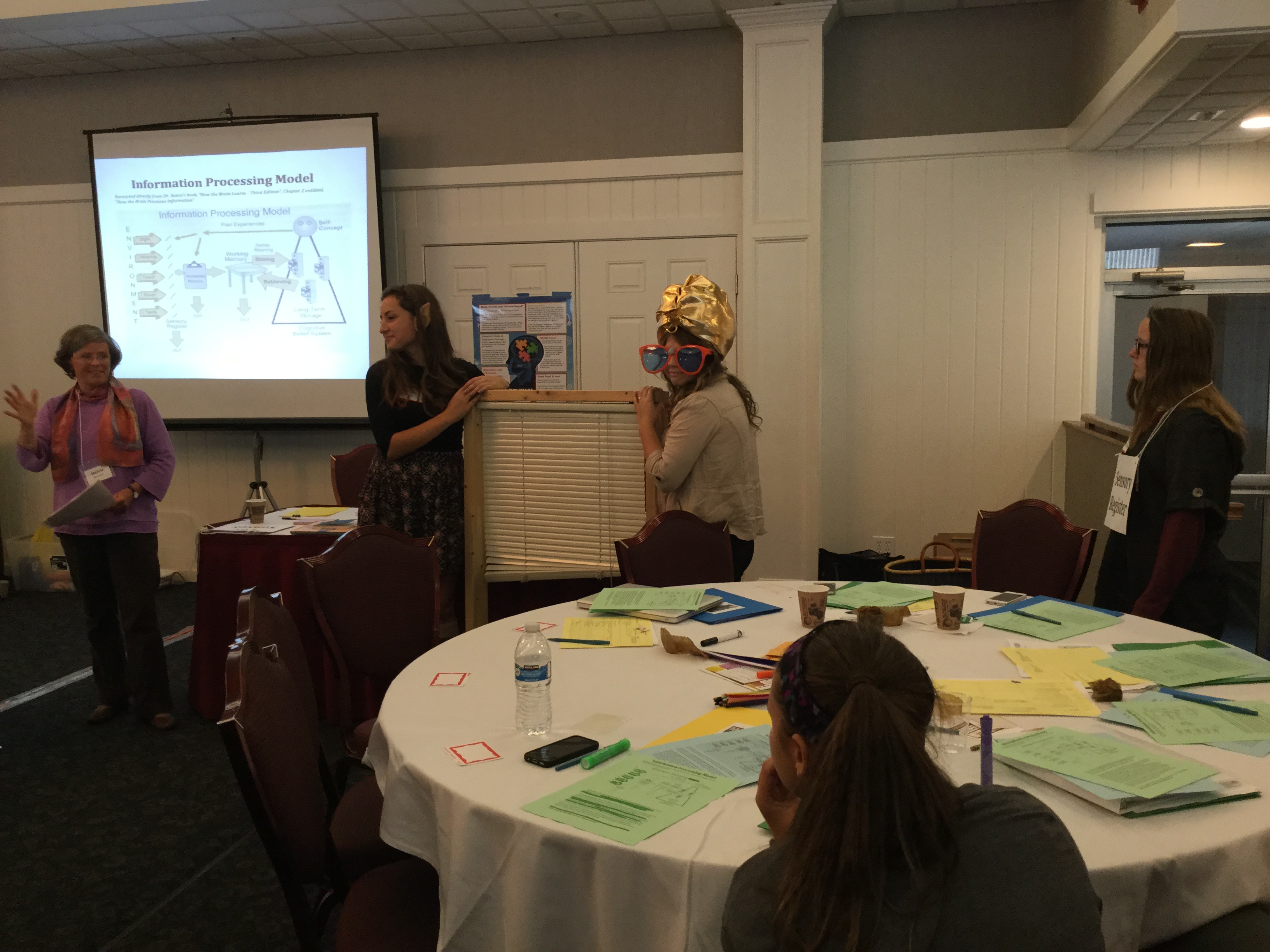 During another student event, a colleague and myself took six students to a training offered by Up for Learning, an organization that focuses on increasing student voice and ownership of learning. The training focused on the need for growth mindset as we make these changes as well as how to market this message to the appropriate stakeholders. The goal was to equip students with information about growth and fixed mindsets and why these ideas are so important to personal and proficiency based learning. The impression I got from the two high school students that came from our high school was that the information itself was a review. This makes a lot of sense because we have been hammering the kids with these ideas for the past two years. Their “boredom” with the ideas (no reflection on the training at all) actually led to some really interesting work on giving the ideas a fresh look. During the session on marketing, they came up with some great ideas for interactive art installations, social media campaigns and collaborations. I came up with some great ideas about how to engage parents (more on that in November). Finding the time to make all the amazing ideas a reality is another issue. Again, it became clear to me how we need systems in place to allow students to follow through on their creative innovations. The connection to personal learning is clear. I fear that student schedules are so filled up with structured time, that all the time needed to develop their more creative sides is not prioritized. I know that everyone worries about the unmotivated students not being able to use unstructured time wisely; just last week I had to request that one of my more academically unmotivated students refrain from doing research about a project for automotive class; another student was researching the building of a bike racing course. I’m not convinced that the students who are unmotivated by traditional coursework wouldn’t be motivated if they were able to pursue their own interests. Interests that have plenty of potential to be purposeful ideas.
I acknowledge how difficult it is for students to collaborate with teachers. So many times, we shoot down their ideas because we have more experience than they do despite the real need for us to hear where they are at so we can meet them there. So many times, we become defensive because we have such an investment in our ideas and the transformations we are talking about. Many times we may feel we know what’s best or know more than our students. While this all may be true, we need to create systems that allow us to become partners with students in a way that gives us the much needed time that doing this well requires. It is so important that students do not feel that their voices are “token” but that they are true student collaborators and have power over their learning. In order to do this, we need to begin to trust that students will use their time wisely and we need to provide real opportunities for them to practice this type of self-directedness. If your school has a system for student collaboration, please share it in the comments.
The post Student Collaborators appeared first on Fearless Teachers.
]]>The post Student Involvement in School Change: Organizing appeared first on Fearless Teachers.
]]>If you haven’t read my previous post on the 1st steps I took with regard to student involvement in the school change process, you may want to before continuing. During this second meeting with students, I asked them to consider all the ideas that they had brainstormed and categorize them; I directed them to identify whether the identified change would have a high impact or low impact on student engagement and preparation for their futures. I also asked them to consider whether the change would be easy or difficult. I documented their very interesting and at times insightful conversations. Prior to this meeting, I had sent all students a video of the inservice presentation on Vermont’s Act 77 and educational quality standards that teachers had received several weeks ago. Unfortunately, none of the students had watched the video and were missing some pertinent information during their discussions especially around grading. This was particularly interesting given the discussion students had regarding the flipped classroom methods they have experienced. Despite a lack of preparation, several themes came out of the discussion that I think are important and we will have to revisit next time we meet. One was grading and assessment methods. The second was classroom instructional methods. And the third was the issue of time. These are certainly essential elements of personal learning. Check out the ten minute video below to hear some of the student comments this protocol elicited.
The post Student Involvement in School Change: Organizing appeared first on Fearless Teachers.
]]>The post Students Transforming School: Brainstorming appeared first on Fearless Teachers.
]]>Introduction and context:
As the first task of my fellowship, I created a steering committee to help me with the work I would be undertaking next year. I chose several teachers and an administrator and asked each one of those people to invite two students to participate. Because my project is about personal learning ( and I am a staunch proponent of equity), I asked teachers to consider all their students, regardless of academic success. Once I had this information, I began meeting with students first without the teacher members present. I was transparent with both the teachers on the committee and the students that I wanted to really hear from students without any adult influence.
Brainstorming:

Prior to my first meeting with students, I provided them with an overview of the steering committee purpose. I recorded a mini-lecture on video and sent this to students several days before the actual meeting. I let them know in the video that this would allow me to talk less during our meeting and allow them to have more time to share their ideas. During the brainstorming session, I instructed students not to make any judgements about ideas but to simply let all their ideas be explored. I kept quiet during the meeting except to say several things. One reason I interjected was to maintain the norm of nojudgement. A second reason was to clarify or request elaboration on their ideas. The last reason was to encourage all students to participate. The prompt I gave students was to think about their ideal school and describe the elements of that environment. I provided 5 minutes of private thinking time and then convened the group to share the ideas. I took notes while students shared what they had come up with. They were less radical than I thought they would be but they came up with a pretty good list. I pushed them a little harder during the second meeting.
Protocols for brainstorming:
Tools for brainstorming
Technology/ apps
Stormboard allows real time brainstorming to happen with a a variety of collaborators
Twitter with the use of a hashtag (or several) could be used to generate ideas
Another way…
This is sort of what I did but I didn’t do it deliberately. Try something called brainwriting as described and well reasoned in this post.
The post Students Transforming School: Brainstorming appeared first on Fearless Teachers.
]]>