The post Student Collaborators appeared first on Fearless Teachers.
]]>I have been struggling to keep students engaged in this work as they are extremely busy people. Students are committed to sports, drama, work and so many other activities. Many of these students will have to wait until they have their own children to enjoy the benefits of these changes. Despite that, I have several that are consistently involved. At the beginning of October, two students joined the rest of my steering committee for a planning session run by Eagle Rock School Professional Developers and organized by the Rowland Foundation. I was proud to have the most student representation of any other team. I was also so impressed with the level of participation and articulation that these students were able to exhibit during this day of training. We spent the day, as a steering committee, articulating our goal and creating systems for planning and communicating. While we need far more student involvement, the opportunity for students and teachers to plan collaboratively was powerful. I will be working on creating systems that will allow this type of teacher student collaboration. It is clear that the system is an essential component of this interaction because time is a huge barrier for both teachers and students.
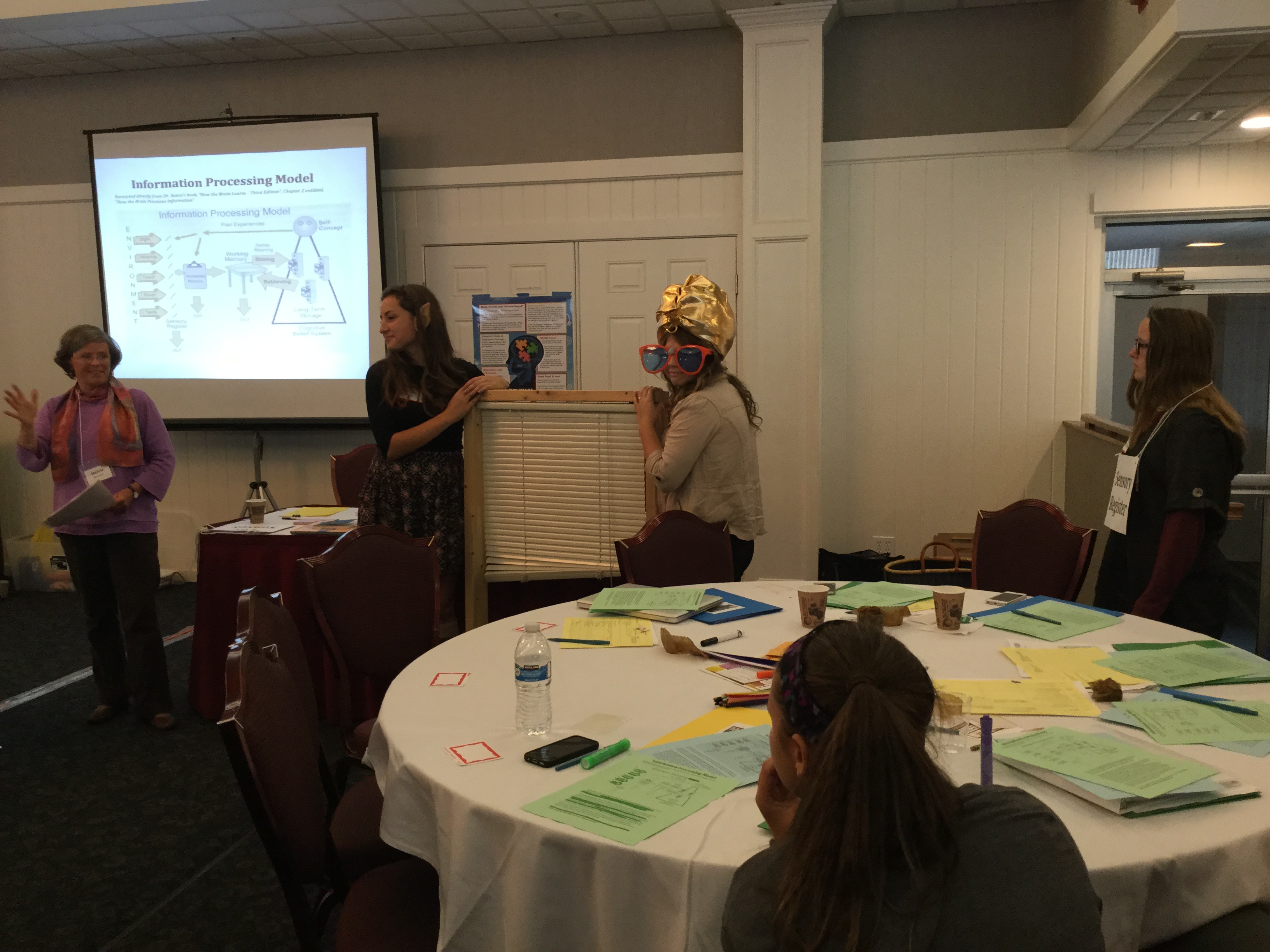 During another student event, a colleague and myself took six students to a training offered by Up for Learning, an organization that focuses on increasing student voice and ownership of learning. The training focused on the need for growth mindset as we make these changes as well as how to market this message to the appropriate stakeholders. The goal was to equip students with information about growth and fixed mindsets and why these ideas are so important to personal and proficiency based learning. The impression I got from the two high school students that came from our high school was that the information itself was a review. This makes a lot of sense because we have been hammering the kids with these ideas for the past two years. Their “boredom” with the ideas (no reflection on the training at all) actually led to some really interesting work on giving the ideas a fresh look. During the session on marketing, they came up with some great ideas for interactive art installations, social media campaigns and collaborations. I came up with some great ideas about how to engage parents (more on that in November). Finding the time to make all the amazing ideas a reality is another issue. Again, it became clear to me how we need systems in place to allow students to follow through on their creative innovations. The connection to personal learning is clear. I fear that student schedules are so filled up with structured time, that all the time needed to develop their more creative sides is not prioritized. I know that everyone worries about the unmotivated students not being able to use unstructured time wisely; just last week I had to request that one of my more academically unmotivated students refrain from doing research about a project for automotive class; another student was researching the building of a bike racing course. I’m not convinced that the students who are unmotivated by traditional coursework wouldn’t be motivated if they were able to pursue their own interests. Interests that have plenty of potential to be purposeful ideas.
I acknowledge how difficult it is for students to collaborate with teachers. So many times, we shoot down their ideas because we have more experience than they do despite the real need for us to hear where they are at so we can meet them there. So many times, we become defensive because we have such an investment in our ideas and the transformations we are talking about. Many times we may feel we know what’s best or know more than our students. While this all may be true, we need to create systems that allow us to become partners with students in a way that gives us the much needed time that doing this well requires. It is so important that students do not feel that their voices are “token” but that they are true student collaborators and have power over their learning. In order to do this, we need to begin to trust that students will use their time wisely and we need to provide real opportunities for them to practice this type of self-directedness. If your school has a system for student collaboration, please share it in the comments.
The post Student Collaborators appeared first on Fearless Teachers.
]]>The post Collaborate With Anybody! appeared first on Fearless Teachers.
]]>As I was leaving my co-planning time today, I turned to my co-teacher and said something to the effect of “I love our co-planning period”. And I truly do, too. We are not only highly productive but we have transforming conversations that change the way we teach on a daily basis. The interesting thing is that we aren’t like minded in most areas. My principal refers to us as the educational odd couple. Many people argue that in order to collaborate two people have to have the same views about teaching. I think it is something different that makes a teaching relationship work.
My co-teacher and I couldn’t be more different. I was a mediocre student throughout elementary and high school; disillusioned by my public education experience. In high school, my priority was socializing and school seemed to be a rote chore. My grades were so mediocre in high school that I didn’t get accepted into college and had to take the alternative community college route (which I don’t regret at all). It took me six years and learning new things never came easily. I got into teaching because I believed that all students deserve a meaningful educational experience. I wasn’t really all that great at any subject but I sort of understood how learning worked because it didn’t come easily to me, so I became a special educator.
My co-teacher on the other hand was the valedictorian of his high school and college classes. He is quick with words and wit. He reads about 8 books a week (maybe a little less since the four kids). He could have been a teacher of practically any subject. I don’t want to say he became a teacher because learning came easily for him because that isn’t the story he would tell but it definitely makes his perspective drastically different than mine. Not only did we get into this profession with different backgrounds, our comfort level with various methods is drastically different as well. He can lecture while I’m all about facilitation. He has a permissive style of classroom management while I am more democratic. I mean the list is pretty long. So how has this worked so well for twelve years?
Be Persistent
First of all, it is important for me to remember that this relationship didn’t develop overnight. And we still have issues we need to work on. The year I was hired, the administration implemented an initiative that required grade level English and history teachers to use common planning time to implement a modified version of co-teaching to support struggling students. We were afforded common planning time at each grade level. Most people didn’t use their planning time or it deteriorated very quickly and that would have happened with us too except I kept faithfully showing up. I continue to show up faithfully. I consider this time sacred and do not let my other duties get in the way or take over my common prep.
Don’t try to win
I came into this job with the idea that I was going to help students access general education materials and I was going to push for the kind of education that I would have wanted to experience. I was also coming in with some background in collaboration. My mindset was that I might not always get what I want and my goal wasn’t to win.
Be Honest But Not Emotional
I was honest but realistic. I nonchalantly brought up issues that I thought were problematic for students and tried to make my cases as objectively as possible with no expectations that change would happen. My intention was to get my teaching partners to question themselves not to get them to do what I wanted. Some battles were easy and some took longer. Many changes have been long lasting even if they took a while to implement. And there are still some things that I would like to change but my co-teacher is attached to. I don’t give up when I don’t get my way. I push my partner every day since I can always see a better outcome (not that things are bad but they are never ideal).
Don’t Take Yourself Too Seriously
My co-teacher has had to be self-reflective. He has to have a thick skin and not take things personally. He has to be willing to try new things even when it is uncomfortable. He has to be willing to do things differently every year. He has to be honest with me when we don’t agree. He has had to live with my constant reminder that the only thing we really have control over is our own actions. I never let him off the hook so he can never slack off. It would be a lot easier for both of us if we didn’t plan together, but I embrace the challenge. Neither of us would learn as much as we do if we spent our common planning time doing paperwork and grading papers.
Have a Common Goal
The standard strategies for making these formal or contrived relationships work don’t really come into play all that much. We don’t come to our planning meetings with an agenda and we don’t follow any formal norms. We both have a vision of students enjoying and discussing books and the bigger ideas that come from reading. We both want kids to enjoy what we do in class and be engaged. This goal is simple. We are committed to making our planning time meaningful and we both believe that our time spent planning impacts student learning and engagement. That commitment has developed over time. It started with me and now I think we are both committed. An agenda might help us use our time slightly more efficiently but that is not what makes out co-teaching partnership work.
It requires persistence, honesty, flexibility, a willingness to take risks and disagree, and a lot of work and frustration at times. So if you struggle with a partnership or have one that could use strengthening remember that it will improve student experiences. If you need to be a little uncomfortable in order for that to happen, it will be worth it. Be persistent. Don’t try to win. Be honest. Loosen up. Identify a common goal. Remember that change is hard for all of us. Check out my review of Getting past no, by William Ury who also influenced my ability to work with just about anybody.
The post Collaborate With Anybody! appeared first on Fearless Teachers.
]]>