The post Empowered or Engaged? appeared first on Fearless Teachers.
]]> This year, I explored proficiency-based learning, grading practices (or no grading practices) project-based learning, complex instruction and looking at math through a lens of social justice. As I visited schools and talked with educators and students, I was looking through the lens of engagement. Each of these topics does work to engage students but a common thread that came up through my research into these topics was the issue of self-direction. This came up as an obstacle and also a crucial skill. All of these learning strategies require students to be independent thinkers and learners. Since this is not a skill that has been previously required of students in a traditional system, it poses a significant obstacle. Self-direction is also something teachers have not taught before. So, all of these ideas promote more engagement for students because they all require more autonomy to begin with. This is where empowerment comes in. In order to implement any of these ideas, we will have to empower students. Empowerment requires not only self-direction but trust as well making it the perfect word to describe next steps in moving toward the type of system that will prepare students to function in a global economy.
I agree with Couros and the quote helped me get much more specific about what we are working toward, but I do think that engagement can play a role. It might be the first step in empowering students. Or maybe they work in tandem? When I imagined a traditional setting with more student empowerment, that didn’t really work either. So, we have to change what and how we are teaching and we need to be empowering kids to take more ownership over their learning through these changes. And how does trust factor into this scenario of change and transformation?
The post Empowered or Engaged? appeared first on Fearless Teachers.
]]>The post Teaching Redesigned appeared first on Fearless Teachers.
]]> re being scored by computers now. Many teachers are starting to wonder what their jobs will look like in the future or if their jobs will even exist. I’m not nervous about whether or not a teacher’s job will exist in the future because teaching is an extremely complex task that is driven by relationships which is something that a computer probably can’t replicate; however I do see the role of teachers changing quite a bit. And I do think that if teachers continue to look at their job in the same way and with the same purpose, they may find themselves without a job. So what does it look like for a teacher now that computers can do many of the tasks that teachers have traditionally done?
Teachers need to get extra creative about delivering instruction. They also need to think about what their purpose is and how it’s different from the traditional role of a teacher. What do our students need from us now that a computer can give them some kinds of accurate feedback on their work? They don’t even really need us to teach them content because much of it can be accessed online. I would argue that today’s learners need to be able to find problems and think creatively so they can develop new solutions that will compete in our global economy; they need to be able to research and they need to be able to communicate in a variety of mediums. Our purpose is to help them gain these skills. There are many things that humans can do to develop these skills, that a computer can’t do.
Relationships Developer
Relationships are probably the most foundational thing that computers cannot replace. We need to get to know students academically and also all their various strengths, passions and needs. This is so we can skillfully advise them and act as mentors. It is so we can develop curriculum in a way that it will be relevant and meaningful to our students. We need to develop relationships with community members so that when our students are interested in something that we are no longer experts in, we can connect with community members to help us.
Collaborator & Communicator
Developing these relationships means that we also have to be skilled collaborators and communicators. Our ability to communicate learning expectations and then collaborate with students and parents to make these learning targets meaningful is essential. For many of us, managing this and figuring how to incorporate this with the vestiges of traditional educational systems is a challenge and maybe even an obstacle. As a result, we have to be particularly creative. Again, something that a computer may not be able to replicate.
Innovator
 The innovative mindset required to address this creative need allows us to combine all that we know about teaching and learning, all the skills we have as curriculum designers and learning managers and remix that with student interests, passions and strengths. This type of innovation requires complex and novel thinking that requires flexibility and intuition. These human interaction skills are not going away and are in fact becoming more and more necessary and valuable. As we develop more self-directed, personalized curricula, our students are going to need new skills as well. We will need to be adept at scaffolding more independent, open-ended learning opportunities.
Scaffolder
As skilled scaffolders, we will combine all we know about our students with our knowledge of instruction and experience as learning managers to develop protocols, outlines, routines and procedures that will allow students to experience success with more open-ended tasks that are less familiar to them. Protocols can help organize student thinking and discussion. Outlines can help students organize their ideas and products while allowing them to be more independent. Routines and procedures can help students stay focused during inevitably unstructured times.
Researchers
The final skill that teachers currently have and will have to remix in order to compete is as researchers. While teachers are already skilled at researching, we will need to use these skills to curate information rather than disseminate information. Keeping track of and organizing this information so it can be accessed for a variety of purposes is a new skill that we will need to hone. I have begun to do this using hashtags on Twitter and boards on Pinterest. Others have different methods and some will need to start coming up with their own routines.
If we add all these new roles to our traditional role, we might become overwhelmed, so although it’s hard to let long held traditions go, it will be important to consider our new purpose and when possible let things go. Are we hanging on to old practices that could be replaced with something that is already part of our new role? These will be difficult changes to identify and redevelop. They will take time and collaboration. What’s one thing that you spend time on right now that doesn’t help kids learn? Could replace that practice in a way that might redesign your instructional practice to be student centered?
The post Teaching Redesigned appeared first on Fearless Teachers.
]]>The post Are There Benefits to “Bucking Up”? appeared first on Fearless Teachers.
]]> ion from any variety of places, so yes, they have a choice. A choice many of us never had. Hudgens points out that there is value in “buck[ing] up and say[ing], ‘This is hard. This is boring. I don’t want to do this. But I’m doing it anyway. And I’ll do my best’ ” in her article Do teachers care more about schoolwork than your kids do? Here’s how to fix the apathy problem. Hudgens isn’t the only one having this conversation. Even some advocating for school transformation are struggling with this question.
I did the math, just for fun; I spent approximately 12,600 hours in school from kindergarten to 12th grade. Many of those hours were likely spent passively sitting in a classroom without any accountability except a test at some future time. There is an implication that students who push back at this type of learning are not self-motivated and aren’t willing to take responsibility for their learning but I think the exact opposite. Sure, they are not passively sitting by; they are taking initiative to get their needs met. They need to learn in a different way because their world is different and they are telling us loud and clear. Not motivated? To learn what we want them to learn maybe, but I think it would be a stretch to say that kids who think they deserve to have personally relevant learning opportunities are not self-motivated. And at this point, I’m not even sure that we know what today’s students should be learning. Today’s learners will likely be creating their own jobs, so they probably have at least as good of an idea if not a better idea than we do about what is valuable, right?
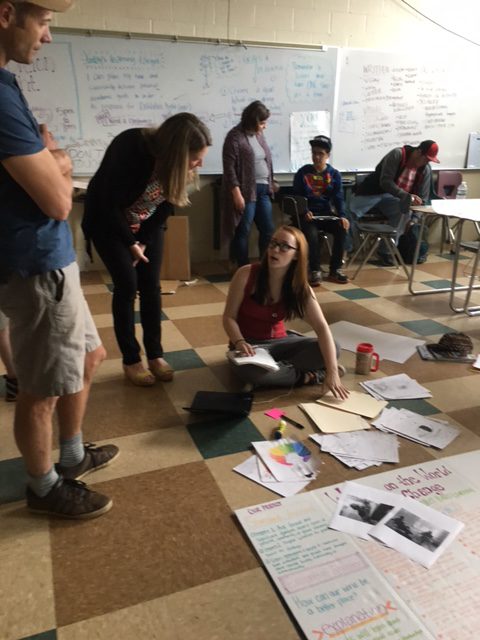 The argument that rote learning gives students an opportunity to learn to perseverance is misguided because it assumes that just because a learning endeavor is creative or fun that it won’t prepare students to persevere. At a recent exhibition of learning put on at our high school, I interviewed students about their process in a very self-directed academic task where they had total autonomy over the topic and the product. Every one of them experienced frustrations and obstacles that they had to work through in order to get to a final product. They learned how to persevere and were actively engaged the entire time. Students should be given opportunities to take responsibility for their learning by having choice and autonomy about what, how, when, and where they learn. Teachers should provide students with opportunities to engage in learning tasks that are authentic and long-term so they can experience perseverance and follow through. Just because a child engages in learning that is personally interesting doesn’t mean they won’t encounter steps that will require self-motivation and perseverance.
The argument that life is sometimes just a bunch of hoops is not true. We get to make choices. Yes, there will be things that we will have to do to get to the end but if the end is something we are passionate about then we will be self-motivated to do those things. Eric Toshalis discusses the issue of motivation in a video from the 2012 Students at the Center Symposium in Boston, MA. I challenge anyone to come up with something they absolutely had to do in life that didn’t lead them to an ultimate goal that was relevant for them.
I feel bad for people who think they have no control over their life circumstances; who think they have to just “buck up”. No, no you don’t. I want the kids who live in my community to feel in control of their lives. I want them to know that I believe in them and that I trust that, while they may need guidance, that they know what is best for them. In a recent conversation with a history teacher who took a great risk and had great success in offering a very open ended project to her students, she said, “I just trusted them; it was that simple”. I want them to know that we trust that if they make a mistake, they will learn from it. I want the kids in my community to be happy. I have worked for sixteen years as a special educator with the students who have had the least success as students and I can tell you by the time they are teenagers, they are miserable. I have worked very hard to help them “get through” 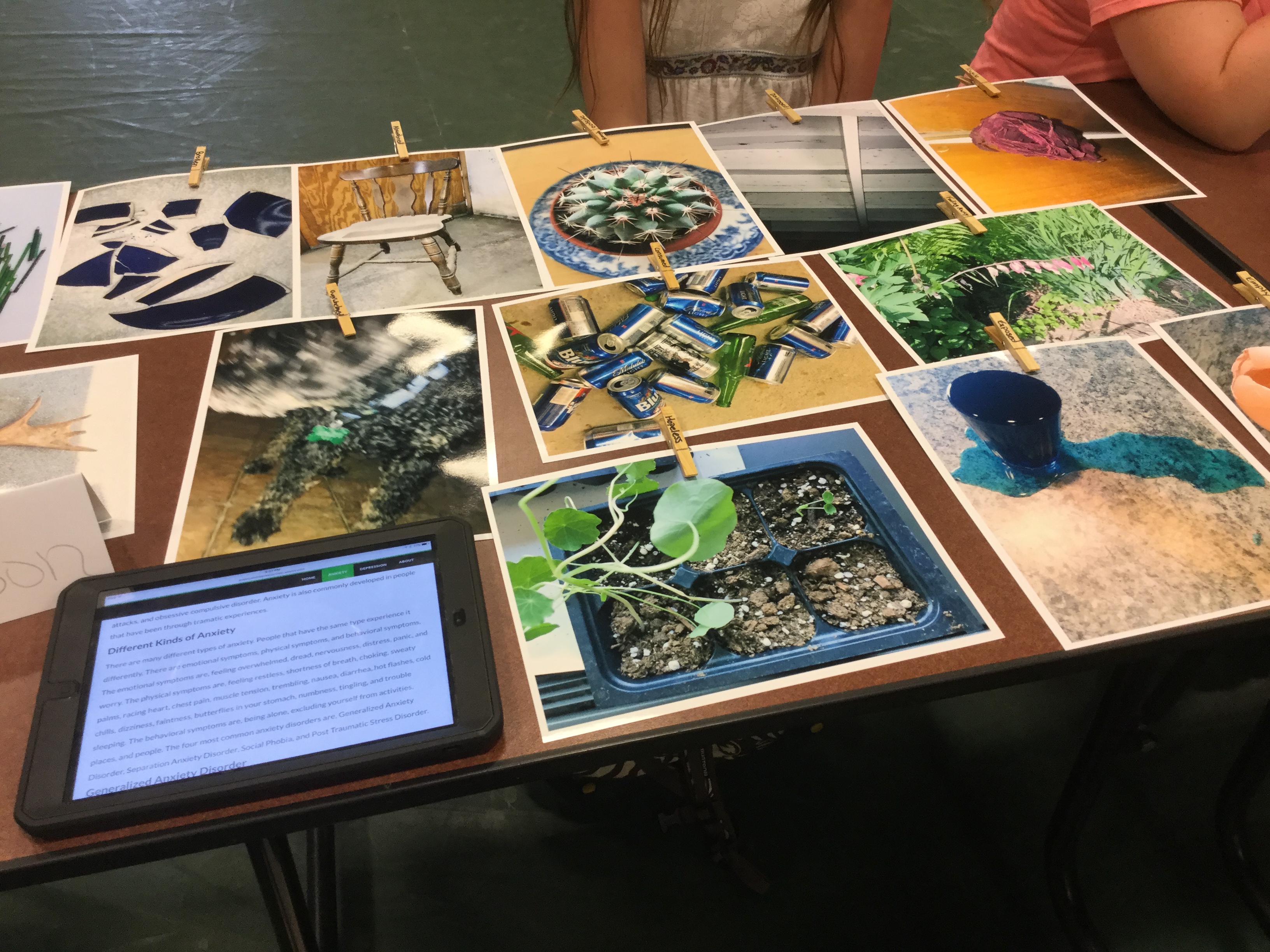 high school, many times asking them to “buck up”. Have I helped them be self-motivated? No. I have added to their belief that they have no say and no choices about their lives. I have limited their self-confidence and ability to be self-directed. I’d much rather see a happy student that is motivated to learn what they want to learn than a miserable student who knows how to “buck up”.
We need to be teaching in a way that is going to help your students be the creative, self-directed, empathetic human beings they will need to be in order to be successful in our ever changing, global economy, whatever that looks like. These are the classrooms and teachers we should be paying attention to. If we talked about all the amazingly self-motivated students and innovative teachers half as much as we talk about all the unmotivated students and test driven schools, we could learn so much more. Hudgens argues that the conversation needs to change. We agree on that. We need to start talking about what’s working instead of what’s not. Put a #SpotlightOn all the amazing learning and achievement that is happening in your classroom.
The post Are There Benefits to “Bucking Up”? appeared first on Fearless Teachers.
]]>The post Personal or Personalized Learning? appeared first on Fearless Teachers.
]]> When I wrote my Rowland fellowship proposal a little over a year ago, my main concern was to make sure that mandated personal learning plans didn’t become another superficial piece of paper that had little meaning for students. Over the past year, I have made a lot of discoveries and confirmations. I think the number one issue that has taken over my thoughts is that any change or innovation starts with relationships. This foundation allows for the trust needed in order for every stakeholder to feel safe enough to take the risks necessary to innovate. The idea of personal learning has also really taken shape for me. Initially, I was focused on the personal learning plan itself. It soon became clear to me that the idea of personalized learning was more complicated than I had originally considered. Many people are developing software that tracks student progress so the student can independently work. The vast majority of these folks are calling this personalized learning. Alfie Kohn has made a distinction between personal and personalized learning in his article Four Reasons to Worry About “Personalized Learning”. He argues that “Personal learning entails working with each child to create projects of intellectual discovery that reflect his or her unique needs and interests. It requires the presence of a caring teacher who knows each child well” while “Personalized learning entails adjusting the difficulty level of prefabricated skills-based exercises based on students’ test scores. It requires the purchase of software from one of those companies that can afford full-page ads in Education Week” (Kohn, 2015).
Many people are confused by these terms and I have become much more clear about my vision for personal learning and how we might get there. While I agree with Kohn that there are two totally different ideas about how to increase achievement, I’m not so sure it is the language that matters as much as the ideas. What I have come to realize is that in addition to relationships, the primary concern in making learning more personal is student engagement. Since this looks so different for each student, any number of options could be used to engage a student in a variety of subject areas. What might be engaging in one area or to one student might not work in another situation. So “personalized” learning might be a part of a student’s personal learning plan but it would never be the personal learning plan. In addition, every community will have different needs as its ecosystem will be unique.
Systems & Structures
There are some systems and structures that I am seeing that assist in facilitating relationship building and engagement. Advisories that loop with students for multiple years help students develop much needed trust with adults who can then guide them; authentic student involvement in schedule building and school decision making processes; authentic project based learning opportunities; independent study structures; arts as a part of the core curriculum rather than an extra; professional learning that happens collaboratively between teachers in an ongoing way rather than one time workshop models. These structures are facilitating personal learning in meaningful ways. While change can happen from the top down, it is clear that bottom up change is more sustainable. Administrators can facilitate change by creating systems and structures that enable teachers and students to do things differently. Transforming schools where students are self-directed learners and teachers are facilitating personal learning options is an enormous change from what most of us have experienced as educators and as students.
Even those of us who are leaders of the change, couldn’t have ever experienced this on a large scale and in a public school setting. Whenever anyone is expected to learn something new, all other extraneous learning should be put aside. We would never expect a child learning how to ride a bike to also track her speed and heart rate, right? Making change of this scale happen requires systems that allow and support flexible learning for both teachers and students. Systems allow teachers, and sometimes force teachers, to make changes while also providing a support structure for inevitably difficult challenges that come with any major transformation. Creating these systems allows teachers to focus on increasing engagement by being creative in their classrooms. It also allows any change to sustain itself through new administrators and teacher turnover.
The post Personal or Personalized Learning? appeared first on Fearless Teachers.
]]>The post Personalized Learning in Classrooms appeared first on Fearless Teachers.
]]> For the past several months, I have been part of a team attending a Vermont seminar series on proficiency based graduation and personalized learning. At times, I have found myself so overwhelmed that I wondered how a transformation so enormous could be possible? I have felt the sinking feeling of doubt that such amazing transformations are simply not possible in a public education setting. After the initial shock and feelings of futility, I began to identify the smaller action steps that need to take place in order for this change to occur.
Mindset
As usual, before we even begin to make any changes, we need to get in the right mindset; this change is not going to happen overnight; nobody will be making this change alone or in a vacuum. It is important to go into these changes knowing that many times they will be uncomfortable and we may even fail (sarcasm). We will definitely fail. Along with a growth mindset going into this, we need to meet ourselves where we are and make change from there. Each one of us is in a different place, but there are many strategies, techniques and methods we are already using that lend themselves to personalized learning.
I keep ending up back at the idea of autonomy, mastery and purpose. These three key ideas lead to motivation which in turn leads to self-directed learners. Self-directed learners have the characteristics needed to truly personalize learning. Much of what is already happening in classrooms already uses the ideas of autonomy, mastery and purpose. If we can leverage what we are already doing and ramp it up some, we can begin to make movement towards more transformational changes.
Autonomy
Autonomy refers to the ability of someone to make choices about what, when and how they do something. Of course there are simple ways of doing this by offering options for final products; an essay or a speech, for example. Teachers can offer various ways of accessing information; read aloud, read silently, read using an audio book; offering options about presenting first or last. What other choices would you be willing to offer students? What would be a stretch for you? How else could students begin to make choices about learning in your classroom? If you struggle with how to give up control, consider what routines and procedures you could put in place to manage these choices. Maybe there are regular times that students must check in with you. Perhaps there is a form that students fill out to document the choices you are allowing. Consider any technology that might help you manage student learning choices.
Mastery
Mastery has to do with the ability for students to go deep in their learning. We have certainly been moving away from “coverage” teaching for many years philosophically. Depending on where you are geographically and which district you work in, the stakes around testing may be forcing “coverage” teaching despite the clear research against it. But many teachers are going deep through project-based learning, collaborative learning practices, and effective use of formative assessment. If you find yourself struggling with the issue of time when considering these options, I want you to consider two possibilities. One possibility is that you are “covering” more when you engage students in project-based learning. So, yes, it may take longer, but are students actually learning just as much and in a more integrated, authentic and memorable way? Would a project-based learning option be more efficient? Second, again, consider the routines and procedures that you could teach in order to make sure time is used wisely by students. As you become more of a facilitator, you will need to consider new management techniques to help organize learning in new ways.
Purpose
Purpose requires students to “make a difference”. They need a real reason and to feel as if the work they are doing has an impact beyond the classroom. I think this is the hardest issue to address and the issue that we have done the least to change. I still find myself unable to tell students why much of what they are learning will have an impact on their lives. While it is true that sometimes kids don’t know what they need to know, we need to work harder at engaging kids. Even more important, we need to acknowledge that this is important for their learning. It isn’t enough to tell kids that we know what’s good for them. To be honest, I’m not sure that is entirely true anymore. The world has changed drastically just in the last decade and it will continue to change at breakneck speed. Do we really know what is best for students to learn? The kids we are teaching are going to have to create their own jobs. We need to be teaching them how to do this thinking. Much of this has to do with providing scaffolds that allow students to make meaningful choices. We should be creating environments where students are exploring not only their surface interests but their talents and passions; the activities that make them forget that they are doing work. The content we are used to teaching may not have as much value anymore. I’m sure that is a controversial statement for many to take in and I encourage comments of discord but I think we need to question ourselves when we say students have to know something. We should take the time to figure out how they might use it or what skill it helps them develop. And if it does turn out to be essential, we need to take the time to help them uncover why as it relates to them. This process of getting to oneself may seem extraneous but it is in fact essential to learning. Spending time allowing students to get to know themselves as well as time you spend getting to know your students is worthwhile when you go back to the essential components of motivation.
As we consider the changes that we are willing to make, keep coming back to routines, management strategies and technologies that might help you organize and scaffold learning experiences that provide autonomy, mastery and purpose. Please add your own specific examples in the comments section so we can begin to help each other build a repertoire of methods that work toward autonomy, mastery and purpose. If you are struggling with what to do in your classroom, consider a #fearlessteachr that you know. What would they do?
The post Personalized Learning in Classrooms appeared first on Fearless Teachers.
]]>The post Personal Learning Plans for Everyone appeared first on Fearless Teachers.
]]>As we move towards the use of personal learning plans in Vermont, I have really been wondering what it might look like in our current system. I set out on an individual professional learning path this summer in order to reflect on what it might look like for students. To be ho nest, I like the structure of classes and have taken one almost every semester for at least six years now. I wondered if I could learn without the structure of deadlines and course objectives; I found that I actually learned more than I set out to and was able to manage my time well. I started with one learning goal but I learned so much that it sparked other interests.
I spent a good part of my summer on the computer. I learned a lot about technology and about how I learn. I really thought I was pretty well versed in this topic since I have been thinking about it for most of my school aged life. I have never spent my summer focusing on professional learning before. Maybe I might take a class or something but I never spent time learning what I want for the sake of learning what I want. It was a great experiment and really got me thinking about how we could get kids to this place in a public school setting.
One thing I did was commit to my blog. I wrote at least once a week. I started doing this in April using my blogger account but soon became interested in going further so I moved my blogger site to a WordPress site. While blogger was free (and trust me I hedged the move), I have limited skills in the area of website design and maintenance. Anytime I needed help it was a struggle. Bluehost is a hosting company that costs money but it has been well worth it. They were extremely helpful. This led me to develop all kinds of skills around website development and technology. I also did quite a bit of research about online business. This all came from committing to write on my blog once a week. And it costs me $4 a month. I have developed all sorts of ideas that I had only really been thinking about in my head. I have created some plans about how I want to implement these ideas in the classroom. It has helped me articulate complicated instructional concepts so I can collaborate with others on them in a meaningful way. Mostly, I noticed that the more I wrote, the more I had questions and sought out answers leading to more information.
 Last Spring, I took action on a topic that has interested me for years. I had never done anything before except for think about it. I sought out a colleague with a similar interest and we co-taught an online course together this summer. It was so much fun to collaborate with him. As a result, I have a plan of action and so many ideas, I don’t know what to do with them all. Plus, I found an amazing colleague in my co-teacher. We are so different in our approaches and strengths that I am able to learn even more from him. Ideas that took me years to develop have become so much deeper in just a few months.
Finally, I got on Twitter. I have never been a user and I really couldn’t see having to check another online social site. I have felt overwhelmed with email and Facebook. But I have heard positive things about Twitter and professional learning, so I figured out how to use it and tweeted some stuff. Then I figured out hashtags. One night, I stumbled onto a chat. Now I use Tweetdeck to manage more than twenty chats that occur weekly. Watch out because they are fast. My favorites are #nbtchat (no box thinking), #whatisschool, #colchat (culture of learning), and #sblchat (standards-based learning). I have almost 400 followers that are mostly teachers from around the country looking to share and collect innovative ideas for use in the classroom. I haven’t had one negative nelly yet. Everyone in the chats has been committed to improving learning and school change. After I attended a few chats, I
started seeing some familiar names. We have conversations and are really getting know each other.  Every now and then one of the two people I know face to face on Twitter will “favorite” something I have posted. If you are interested in developing your own professional learning network on Twitter, I have put together some resources.
Vermont has developed some resources around personal learning to help students organize their own personal learning but I certainly have some ideas myself. So much for inservice administrators! We don’t need that anymore. Some key components to staying productive are setting goals, setting aside a routine time and creating a system for collecting resources. See my recent post on social media to learn more about ways that this can be done on Twitter and Pinterest.
The post Personal Learning Plans for Everyone appeared first on Fearless Teachers.
]]>