The post 7 Ways to Start Talking Education Transformation appeared first on Fearless Teachers.
]]>
If you have been around the education world for a while, you know that most change happens in the following way. Your principal or administrator makes a decision to go forward with an initiative. An inservice is provided and you are expected to implement the initiative. It’s no surprise that this doesn’t work. We know very well that this is not how people learn. In fact, many of the inservices are about just that. Eventually, the initiative falls by the wayside while the next initiative comes along. Traditional PD is will suffice for some things (although I don’t recommend it) but when we are talking about transformation, it simply won’t cut it.
Why Transform Professional Development?
As teachers build experience, they become immune to the changes, knowing they won’t last. In a study conducted at Stanford University by David S. Yeager and Gregory M. Walton, an observation was made that students internalized messages when the messages were not directly stated. By that, I mean that the students were not told directly that they were trying to be persuaded in a certain direction. They were delivered the information in a more “stealthy” way and that made the intervention more palatable. They were not being tricked but rather the information was presented in a different context, for example, one set of students were given a survey on the information so they simply saw it as a survey not an attempt to persuade. This method worked for students and students are learners. Teachers are also learners so it makes sense that the same would hold true for them.
Professional Development That Leads to Lasting Transformation
Again, I am not suggesting that we should trick people but rather that humans learn by constructing their own meaning. So, in order to implement change, administrators and teacher leaders need to be sensitive to this. Providing genuine opportunities for teachers to explore ideas before they are required to make changes is an important step to the change itself. This will have a direct impact on whether or not a new initiative or innovation will last. Making change requires shifts in belief systems and this can mean changing deeply entrenched ideas. Providing members of a community with information that really gets them thinking about their beliefs and practice is one way to start these conversations. I want to be clear that I am suggesting that exposing teachers to information can get the conversations started but the conversations are critical. Just providing the resources is not enough. Opportunities to discuss and apply the concepts is an important part of changing attitudes and creating shared beliefs.
Books to get people talking
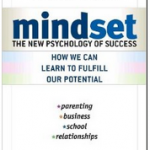 Mindset, by Carol Dweck is a book our school started with last year. The ideas resonate with just about everyone. Dweck describes the difference between having a growth mindset, a belief that intelligence is not innate and a fixed mindset, a belief that intelligence is, well, fixed. There are so many examples of this and most individuals can think of a time when they exceeded their own expectations. She argues that mindset alone can have a strong impact on achievement. Many of the strategies are very easy to implement and require zero planning, which is a huge plus for busy teachers.
 Fair isn’t always equal by Rick Wormeli really gets people thinking about how to create a culture where students can receive different interventions in the same classroom based on their needs. He addresses many of the issues that come up about assessment and grading in a differentiated classroom.
 Both On Your Mark, by Thomas Guskey and Grading Smarter, Not Harder by Myron Dueck will get anyone to reconsider their grading practices. Also, Ken O’Conner’s list of 15 grading fixes almost always gets a conversation going.
Videos to Get People Talking
If your faculty isn’t ready for a whole book or you want to introduce ideas in smaller its, do a quick google search for Sir Ken Robinson and you will find numerous videos that will no doubt get people chatting. My favorite is a quick animation on changing education paradigms with a background lecture. Rick Wormeli also has a series of videos where he responds to questions about grading. This one, on zeros and the 100 point scale, is a good example.
Magic Professional Development?
 Like Yeager and Walton point out, this isn’t magic. Don’t expect miracles from these conversations; expect it to get messy. That is part of the process. If things do get messy, it is a sign that there is a culture of learning rather than a culture of compliance. This is an important culture for change. Embrace the struggle, the questions, the resistance and encourage those who are engaging to continue to engage, question and look for answers. Provide opportunities and structures for hashing out these ideas. Check out these protocols for framing discussions on tough issues. Protocols can really help discussions stay productive. And, if there is a book, post or video that got you thinking, please post it in the comments section so we can build resources.
The post 7 Ways to Start Talking Education Transformation appeared first on Fearless Teachers.
]]>The post How to Succeed as a DIY Learner? appeared first on Fearless Teachers.
]]>Many people argue that Massive Open Online Courses (MOOC’s) have failed because completion rates are so low. I would argue that we are just beginning to learn how to personalize learning by using all the resources we now have in our digital lives. Many schools are formalizing this process for students with personalized learning plans but teacher learning systems remain status quo. Many of us think about professional development as a credit bearing course or a presentation that is given to us. Most professionals can probably appreciate other resources and experiences as valid learning activities but do not assign real value to them because they are not given concrete value in the system. We need to expand our idea of real professional development. The purpose of doing this isn’t to simply provide a way for teachers to give themselves credit for all the work they do outside the actual classroom (although it does allow for that), but to expand the ways in which we attain information and demonstrate our learning. Some of the non-credit bearing ways that we already develop professionally are through the development of new units, collaborative projects and professional learning community activities. Some more informal ways that we learn outside of the traditional methods might include using Youtube, TED talks, blogs (or blogging), forums or Twitter to get and share information. Many teachers conduct formal or informal action research in classrooms as a way to develop professionally and improve practice. More formal but less traditional methods for growing professionally are the use of MOOC’s which are set up much like an online course but are free and do not usually come with credit attached. These are not the only ways but this list expands the narrow view of teacher professional development most of us experience in our districts. Assigning real value, even if it is only in our minds, is one way to begin to change the mindset about professional development.
Learning can happen anywhere and at any time. This is so different than the way most of have experienced learning. I know that I have thought of education happening within the walls of an institution and usually at a reasonable hour or at least during the workweek. The students we are teaching right now are going to be using these resources as a necessity just to stay abreast of new information in their future jobs. Now, time is more flexible. You can take a self-paced MOOC and complete it whenever you want. While this seems like a great advantage, it is also a drawback. Because we are not used to managing our time for professional development without a schedule set out for us, it can be a struggle (more on dealing with that later). As far as mindset goes though, we need to shift our thinking that professional development only happens when we are taking a course or when inservice is taking place. These three skills may seem obvious, but because access to information is so easy in the online environment, we are frequently impulsive. If we weren’t then MOOC’s would have had better success initially. We must be deliberate and in using these skills.
4 Actions That Increase Effectiveness of Personalized PD

1. When you set out on a professional development opportunity, no matter what form it takes, set a routine time for completing tasks. Choose a time when you won’t be likely to be interrupted or when things might come up. For me, it’s weekends but for many weekends are filled with family obligations or unexpected social events. It may be getting up an hour early in the morning, or choosing an hour each evening. Maybe you choose one evening and put a couple of hours in once a week. Whatever it is, be consistent. Again, a change in mindset around managing your own learning time and prioritizing this needs to happen in order to take control of your own learning. On a side note, as students begin to personalize their own learning, we need to remember that this shift is happening for them to so we need to scaffold these time management strategies for them.
2. Start out with a purpose. Having a final outcome or purpose will really help keep up your motivation. In a traditional course, you are motivated not only by learning but by credit attainment and the fact that you are paying money. Since you don’t have this motivation in less traditional situations, create one. For example, if you want to implement a new strategy or idea in your classroom, don’t just learn about it. Create a final project for yourself ahead of time. Have a plan of implementation with a timeline before you take an online course or seek out information. I am working toward taking the math praxis right now and am creating my own PD to prepare for it. I signed up for a training site and paid a small fee to take a test and have the diagnostics analyzed. I took that information and searched for courses in the areas that needed work. I am currently using Khan academy and Coursera to develop the skills I need. But my ultimate goal is to improve my skills and retake the practice test so I can be more prepared for the actual test. This concrete goal is really helping me focus on completing each task.
3. Engage with the instructor and other available people. It is really easy, whether you are taking a self-paced course, or just watching Youtube “how to” videos, to watch the videos and then move on. Force yourself to engage. Courses, whether they are self-paced or not, usually have the feature of a forum. Blogs usually offer commenting features as does Youtube and TED. Take advantage of this. Many times you can interact with real experts and other people who are interested in the same topics that you are, allowing you to meet people from all over the world.
4. Finally, keep track of your work. Maintaining a blog or website can be an easy way to keep track of your learning. There is no transcript.
While the skills above are shifts that we need to make as teachers, the reality is that students will struggle with personalized learning as well if we don’t focus on scaffolding these skills in the classroom. We should be modeling for students what we expect to see from them. Using the many free and low cost digital resources we have at our disposal can’t be successful until we change our mindset and improve our independent learning skills. Being a self-directed learner will be a necessity in the 21s century and beyond and teachers need to be adept at these skills themselves in order to assist students in becoming effective self-directed learners.
The post How to Succeed as a DIY Learner? appeared first on Fearless Teachers.
]]>